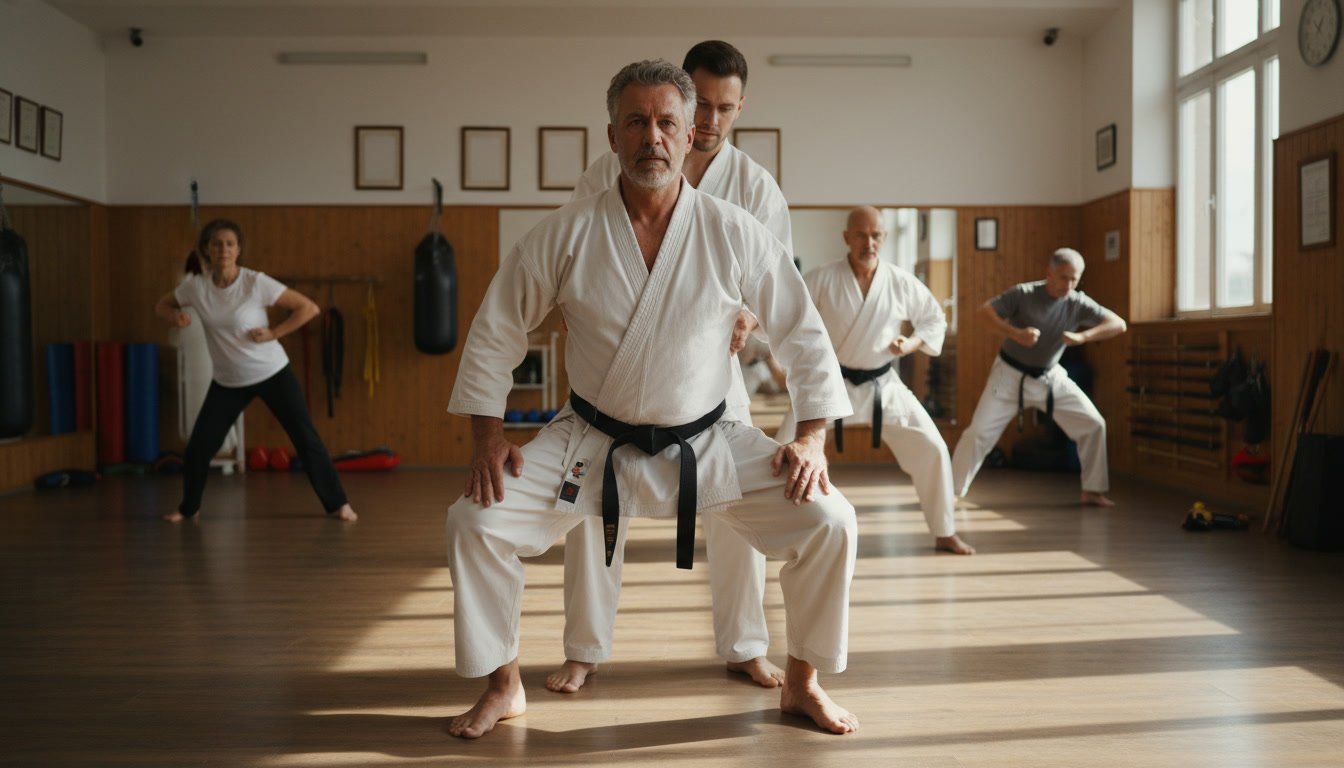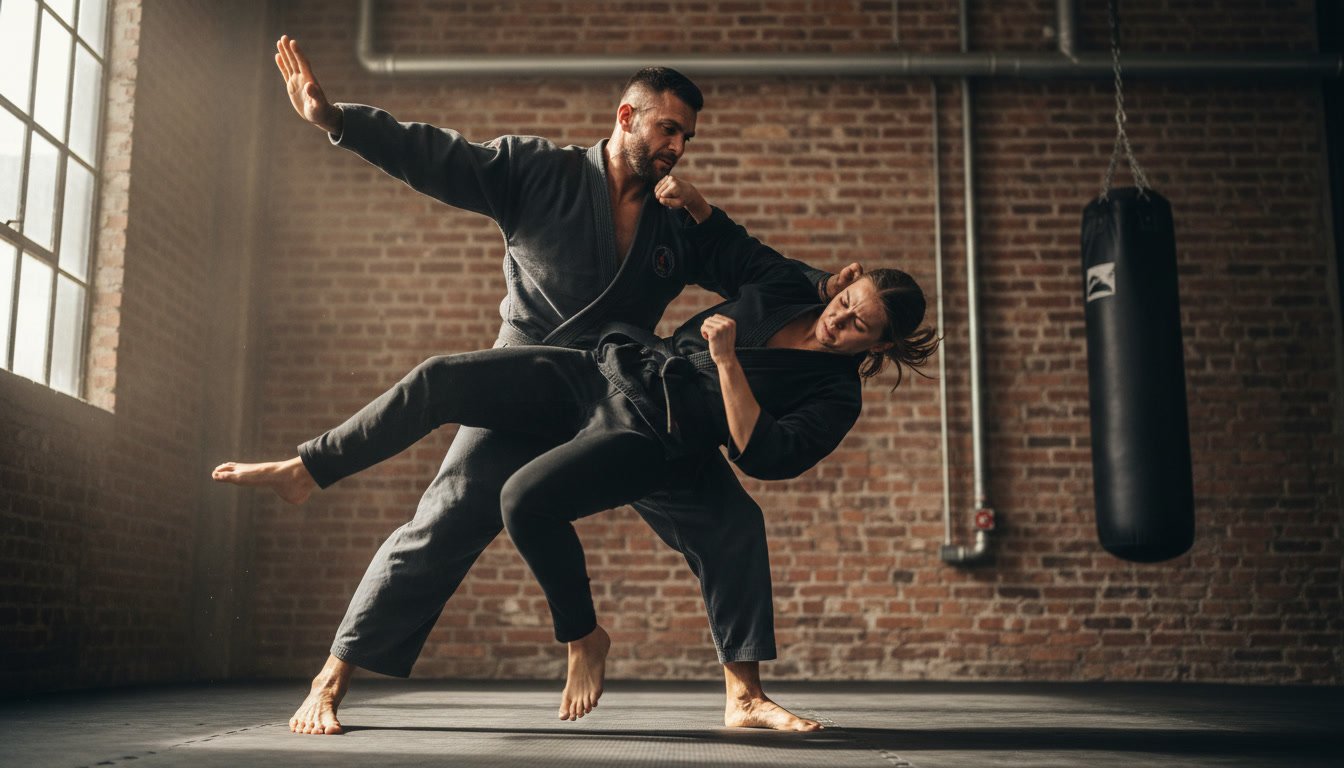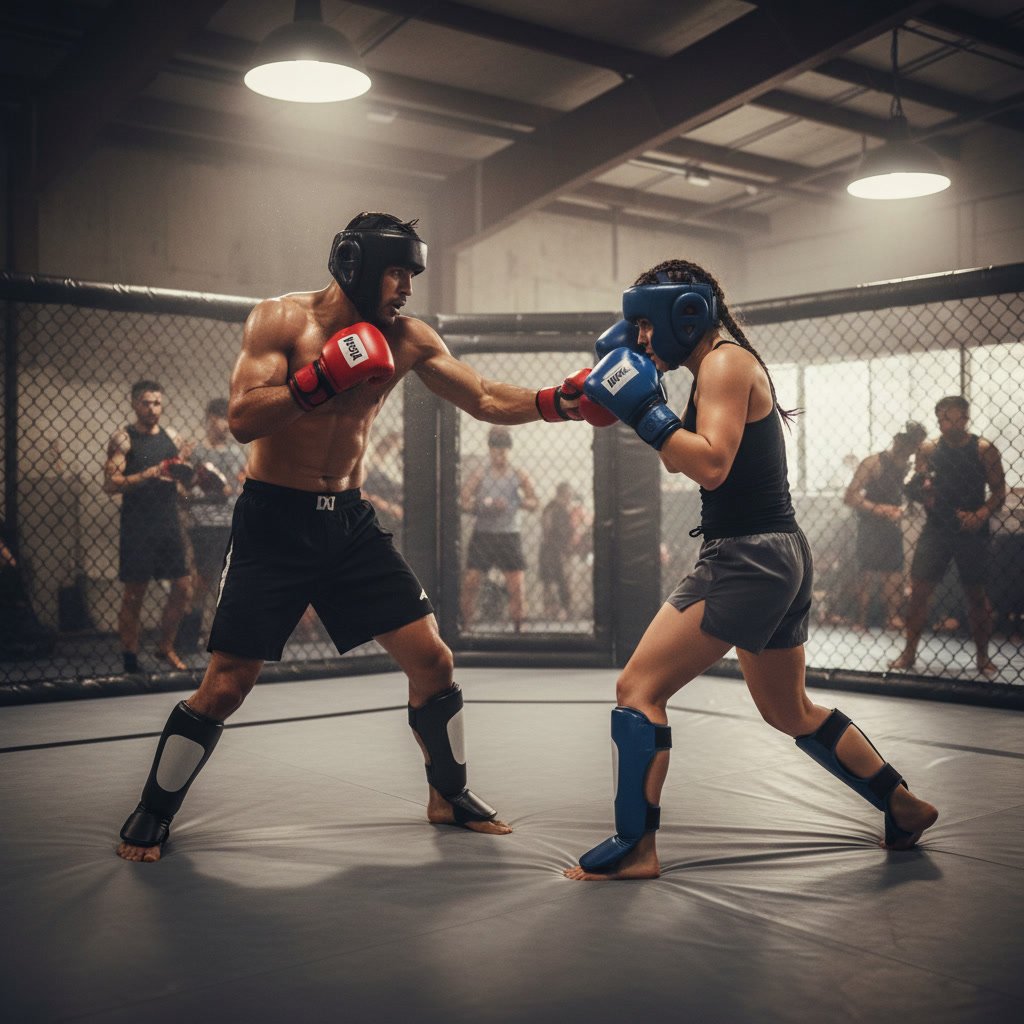
Mixed martial arts training is not one-size-fits-all. Effective MMA programs for different age groups recognize that a seven-year-old learning focus and discipline requires an entirely different approach than a 45-year-old executive building cardiovascular endurance or a teenager channeling energy into competitive sport. Instructors modify intensity, technique complexity, class duration, and teaching methods to match both developmental stages and individual fitness baselines.
Why Age Matters in Martial Arts Training
Physical development dictates what the body can safely perform. Children under ten lack the bone density and muscle development for heavy sparring or advanced joint locks. Their nervous systems are still building coordination pathways, making complex combination strikes difficult to execute consistently.
Teenagers experience rapid growth spurts that temporarily affect balance and proprioception. An instructor who taught a 14-year-old a spinning kick in September may need to re-teach the same technique in January after the student grew three inches. Hormonal changes also influence energy levels, emotional regulation, and injury recovery time.
Adults bring fully developed musculoskeletal systems but often carry years of sedentary habits, old injuries, or chronic conditions. A 38-year-old with lower back pain needs different warm-up protocols than a 22-year-old college athlete, even if both attend the same adult group classes.
Structuring Programs for Young Children
Children ages five through nine thrive in short training blocks with frequent activity changes. A typical session for this age group runs 30 to 45 minutes, divided into five-minute segments. Instructors use games that disguise skill-building: tag variations teach footwork, obstacle courses build agility, and partner drills with foam pads introduce striking mechanics without monotony.
The primary goals at this stage are building confidence, following instructions, and developing basic motor patterns. Techniques stay simple. A front kick, basic punch, and blocking motion form the foundation. Repetition happens through play rather than drilling the same movement 50 times in a row.
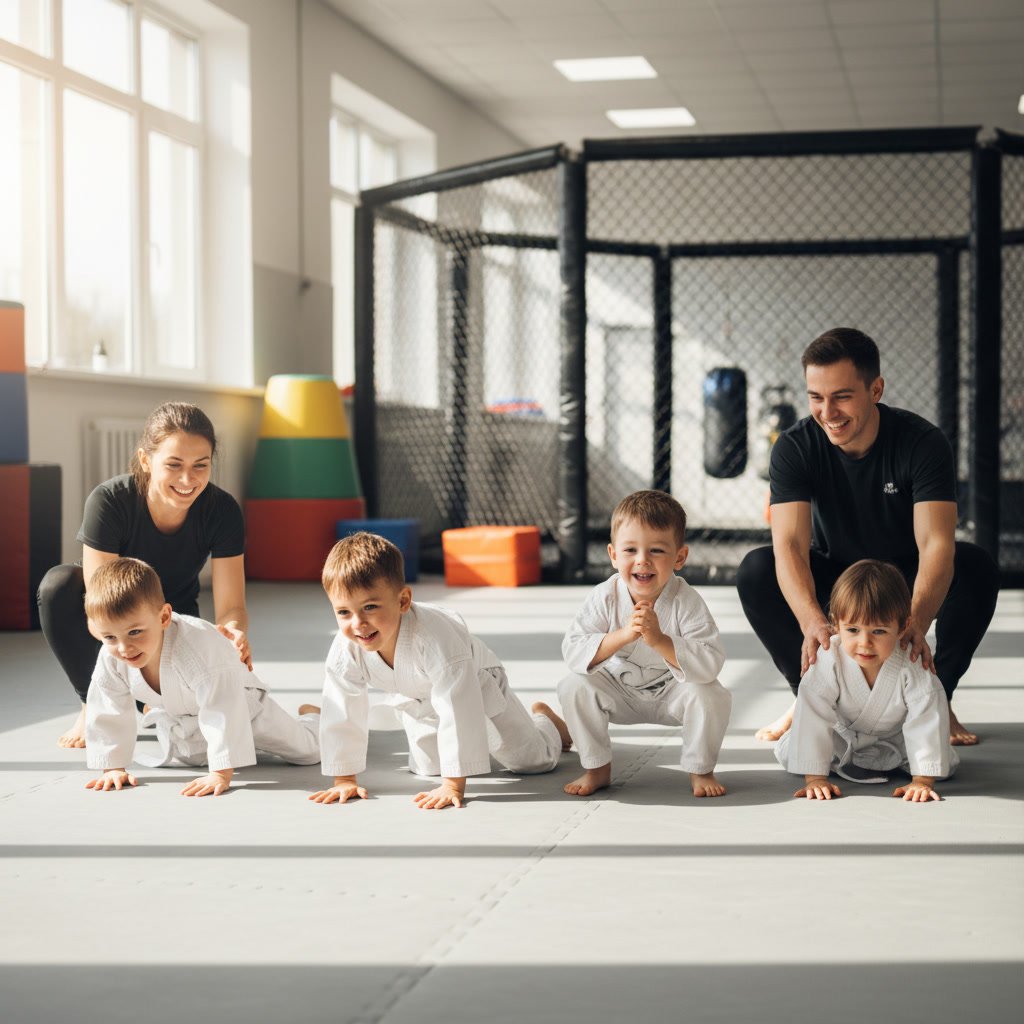
Attention spans dictate pacing. If focus begins to drift after 20 minutes, the instructor transitions to a high-energy activity rather than pushing through. Forcing concentration on a six-year-old backfires, creating negative associations with training. Quality programs prioritize fun experiences that leave students asking when they can return.
Adapting Training for Pre-Teens and Teenagers
Students aged 10 through 17 can handle longer sessions, typically 60 minutes, with more complex skill chains. Teen activities often incorporate competitive elements, ranking systems, and technique refinement that mirrors adult training.
This age group responds well to understanding the “why” behind each movement. Explaining that a low stance in Wing Chun creates a more stable base for deflecting incoming force makes more sense than simply demanding they “bend your knees more.” Teenagers particularly value logical progressions and visible improvement metrics.
Sparring introduces controlled contact, though intensity remains moderated. Protective gear becomes standard, and instructors match students by size and skill level rather than age alone. A 15-year-old who has trained for six months should not spar a 15-year-old with three years of experience, regardless of their birthdays.
Adult Training Approaches in Las Vegas
Adult students in Las Vegas often juggle careers, families, and fitness goals alongside martial arts training. Sessions typically run 60 to 90 minutes, with warm-ups tailored to address common adult limitations such as tight hip flexors, reduced shoulder mobility, or previous knee injuries.
Instructors assess fitness baselines during intake. Someone returning to exercise after a decade-long break starts with modified movements and lower volume. A former high school wrestler jumping into mixed martial arts can handle higher intensity from day one. Neither approach is better; both meet students where they currently are.
Goals vary widely among adults. Some want practical self defense skills for personal safety. Others seek weight loss, stress relief, or competitive outlets. Effective programs allow students to train side-by-side while pursuing different objectives. The beginner-friendly structure of quality schools makes this possible.
Fitness Level Modifications Across All Ages
Age tells only part of the story. Fitness level within each age bracket requires additional program adaptation. An eight-year-old club soccer player has different cardiovascular capacity than an eight-year-old who prefers reading. A 50-year-old who runs marathons differs dramatically from a 50-year-old starting their first exercise program.
Instructors modify three primary variables: intensity, volume, and complexity. Intensity refers to how hard the body works during an exercise. Volume measures total repetitions or training duration. Complexity indicates how many moving parts a technique contains.
A beginner adult might perform 10 basic jabs with 30-second rest periods. An advanced student executes 50-rep combinations incorporating jabs, crosses, hooks, and footwork, with minimal rest. Both students improve, but the prescription matches their current capacity.
Teaching Methods That Scale
Experienced instructors demonstrate techniques at different speeds and complexity levels within the same class. The initial demonstration shows the complete movement at full speed. The second breakdown slows each component to highlight key points. The third version offers a simplified alternative for students not yet ready for the full technique.
Partner drills use tiered resistance. Beginners practice movements with compliant partners who offer minimal resistance, allowing proper form development. Intermediate students add moderate resistance that challenges technique without overwhelming it. Advanced practitioners train against active resistance that simulates real conditions.
This scaling happens simultaneously in quality kids classes and adult sessions. Instructors circulate, offering individual corrections while the broader class works through the same general framework. The curriculum provides structure; individual coaching provides personalization.
Progressive Skill Development Through the Decades
Long-term martial artists experience training evolution as they age. A practitioner who began training at 20 may still train at 50, but the program adapts continuously. What changes, and what stays consistent?
In their 20s and early 30s, students typically emphasize physical performance, speed, and explosive power. Heavy bag work, intense sparring, and athletic drills dominate. Recovery happens quickly, allowing frequent high-intensity sessions.
During their 40s and 50s, experienced martial artists shift toward technical refinement, timing, and efficient movement. They can still train hard, but recovery requires more attention. Warm-ups lengthen, cooldowns include more stretching, and training frequency may adjust to allow adequate rest between sessions.
Students in their 60s and beyond often focus on maintaining mobility, balance, and cognitive sharpness. Forms practice, controlled partner drills, and technique analysis replace heavy contact work. The mental challenge and social connection become as valuable as physical benefits.
Class Structure Comparison by Age Group
Understanding how a typical session differs across age brackets illustrates practical adaptation. Children ages six through nine spend approximately 10 minutes on warm-up games, 15 minutes on skill stations, 10 minutes on partner activities, and five minutes on cooldown and discussion.
Teenagers training for 60 minutes allocate roughly 10 minutes to dynamic warm-ups, 20 minutes to technique instruction and drilling, 20 minutes to sparring or live practice, and 10 minutes to conditioning and cooldown.
Adult sessions running 75 minutes typically include 15 minutes of warm-up addressing mobility limitations, 25 minutes of technical instruction, 20 minutes of application drills, 10 minutes of sparring or situational practice, and five minutes of cooldown.
These structures remain flexible. An adult class with several brand-new students might reduce sparring time and increase drilling. A teen class preparing for competition might extend live practice. The framework serves as a starting point, not a rigid mandate.
Injury Prevention Across Experience Levels
Different age groups face distinct injury risks. Children rarely suffer overuse injuries but may experience acute impacts from falling or colliding with partners. Protective padding, controlled environments, and appropriate supervision minimize these risks.
Teenagers, especially those experiencing rapid growth, are vulnerable to joint stress and tendon inflammation. Instructors watch for signs of overtraining and ensure proper form during explosive movements. Teaching students to communicate discomfort before it becomes injury proves critical.
Adults bring higher risks of muscle strains, particularly in the hamstrings, shoulders, and lower back. Adequate warm-ups, gradual intensity increases, and encouraging students to train at sustainable paces rather than matching the youngest, most athletic person in class all reduce injury rates. An expert instructor recognizes that ego often drives adults to push beyond safe limits and creates a culture where training smart earns more respect than training recklessly.
Integrating Multiple Disciplines for Different Learners
Mixed martial arts draws from numerous traditional styles. Some students gravitate toward striking arts like kickboxing or Taekwondo, while others prefer the close-range trapping of Wing Chun or the flowing combinations found in kempo.
Younger children often start with a single discipline to build foundational skills before cross-training. Teenagers can handle exposure to multiple styles simultaneously, learning how different approaches solve similar problems. Adults frequently appreciate understanding the source arts behind MMA techniques, seeing how Filipino martial arts inform weapon defense or how Jeet Kune Do principles create efficient striking chains.
This exposure must match cognitive development. A seven-year-old learning that a punch can also be a block needs simple, concrete examples. A 40-year-old can grasp abstract concepts like economy of motion and centerline theory. Both students benefit from multi-discipline training; the teaching method differs.
Building Lifelong Skills Through Personalized Training
The most successful martial arts programs recognize that each student follows a unique path. A child who starts training at six may continue through their teenage years and into adulthood, but their needs will shift dramatically across those stages. Programs designed with age and fitness-level adaptation built into the curriculum retain students for decades rather than months.
Flexibility in teaching approach, combined with consistent core principles, creates this longevity. Respect, discipline, continuous improvement, and practical skill development remain constant whether the student is eight or 58. The drills, intensity, and complexity evolve to match where each person currently stands and where they want to go next.
Martial arts training offers benefits for every age and fitness level, from building coordination in young children to maintaining cognitive function in older adults. When programs adapt appropriately, students of all backgrounds can train together, learn from each other, and progress at rates that match their individual circumstances. Ten Tigers Martial Arts (Summerlin) provides age-appropriate programs that meet students exactly where they are and guide them toward their personal goals.
If you or a family member would like to experience how personalized martial arts training adapts to your specific age and fitness level, reach out to Ten Tigers Martial Arts (Summerlin) at +17026230356 to schedule your first session and discover which program best fits your needs.