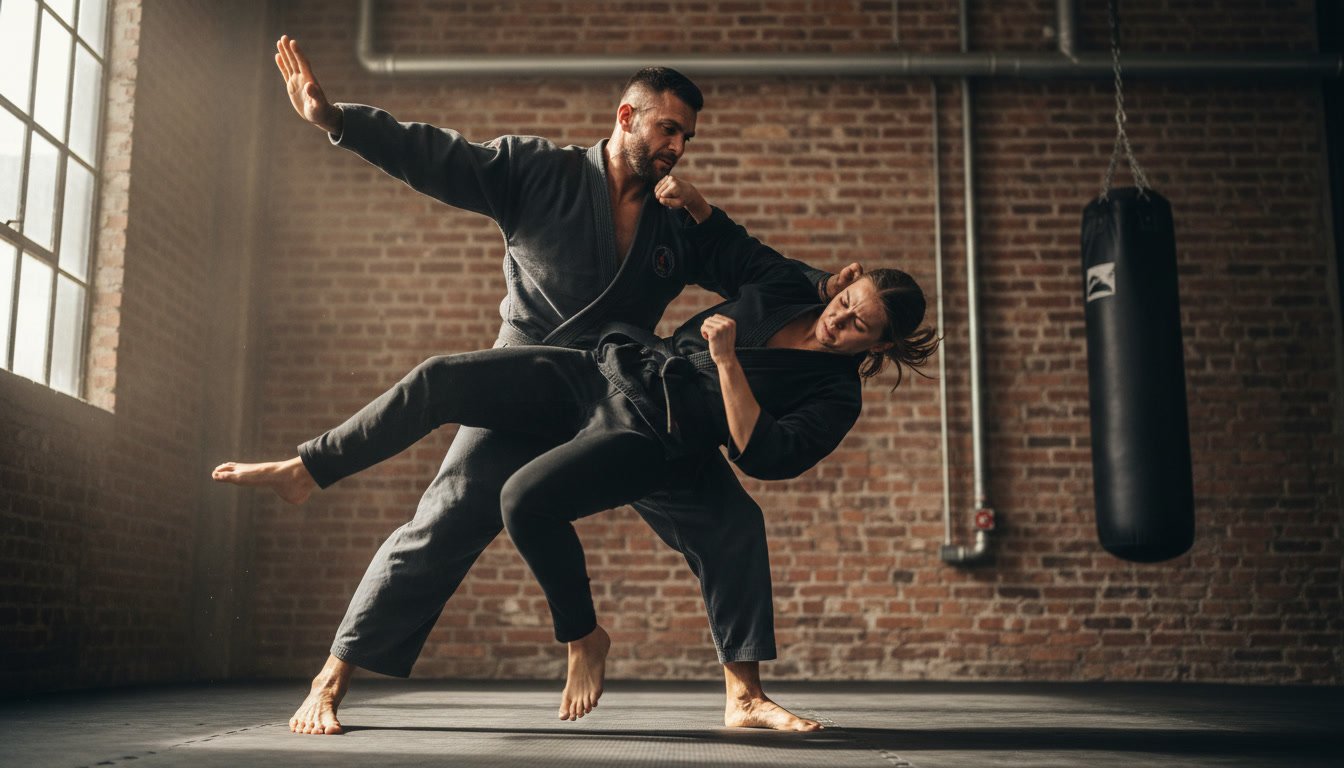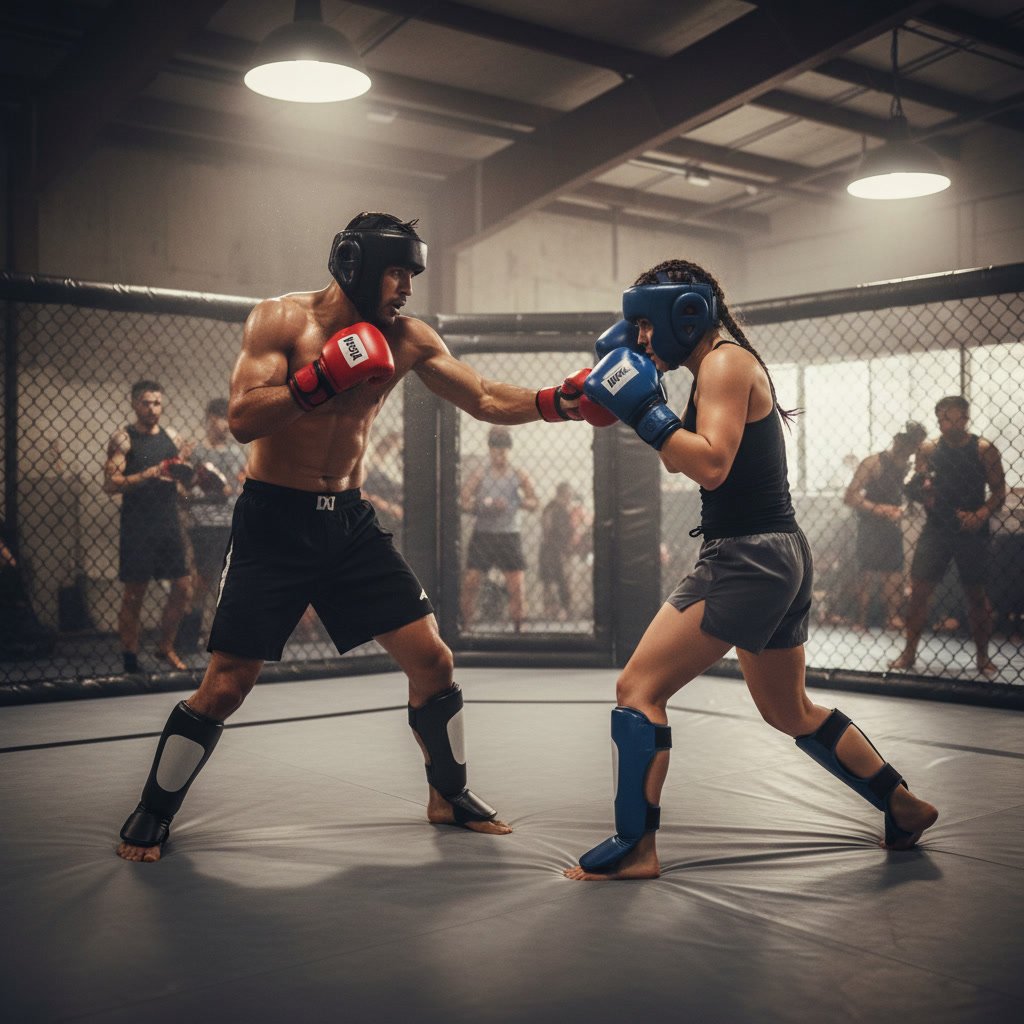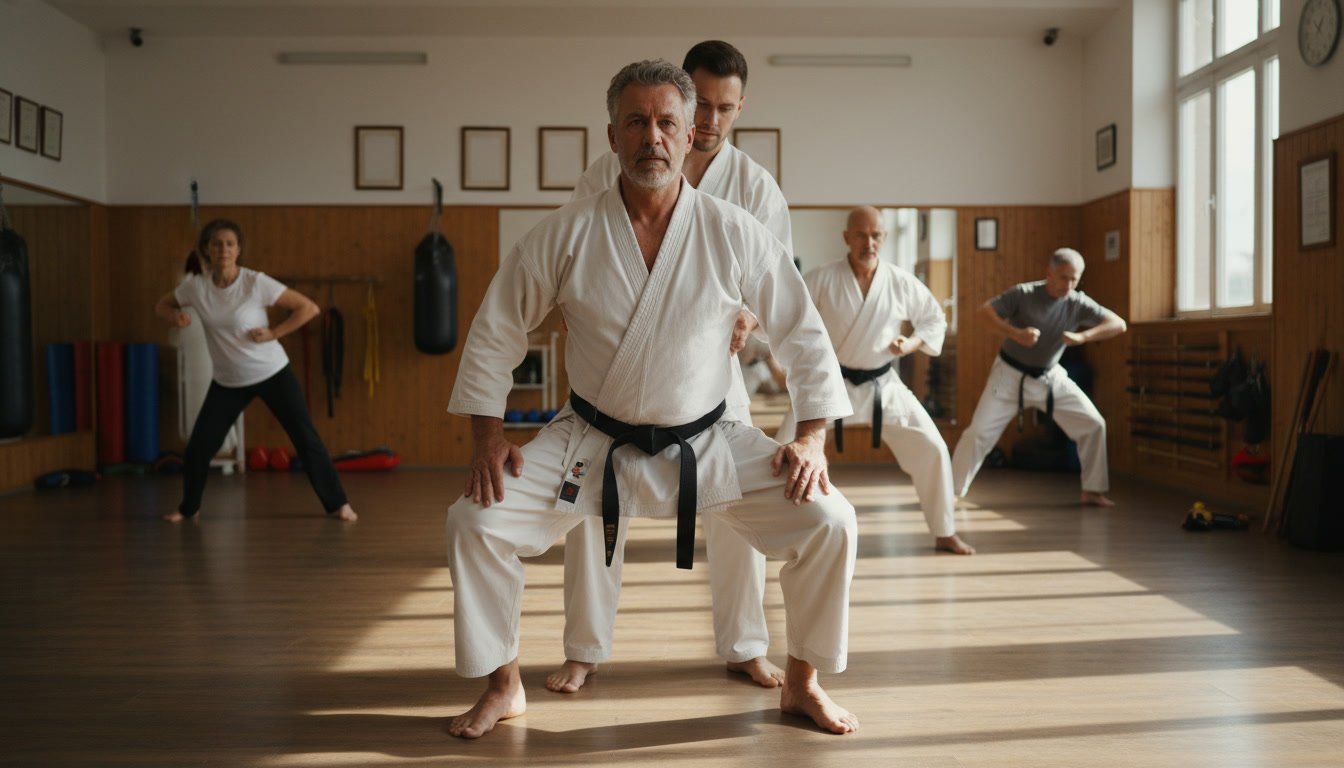
Returning to adult martial arts training after years or even decades of minimal physical activity is entirely possible with the right approach. Your body needs gradual conditioning, your mind needs realistic expectations, and your training environment needs to support both. The key lies in honest self-assessment, medical clearance, and choosing a program that adapts to your current fitness level rather than the athlete you once were.
Why Adults Return to Martial Arts Later in Life
Many adults rediscover martial arts in their 40s, 50s, or beyond for reasons that differ sharply from their younger years. Some seek practical skills after realizing their physical vulnerability. Others want structured exercise that challenges both body and mind. A significant number simply miss the discipline and community they once knew.
The decision often follows a health scare, a milestone birthday, or watching their own children train. Unlike younger students chasing belts or competition glory, returning adults typically prioritize functional fitness, stress relief, and personal growth over performance metrics.
Understanding What Your Body Needs Now
Your body at 45 or 55 operates differently than it did at 25. Joint mobility decreases, recovery takes longer, and old injuries resurface under stress. Ignoring these realities leads to preventable injuries that can end your training before it begins.
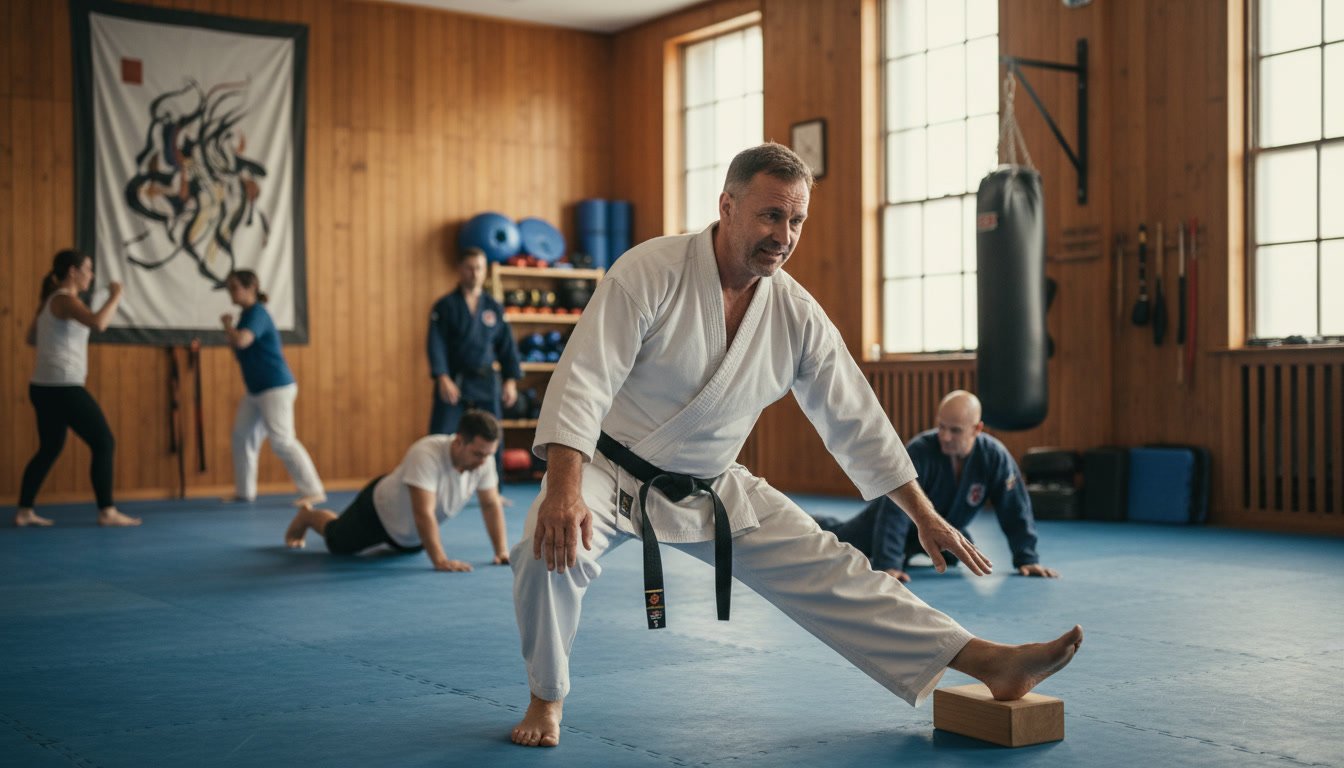
Muscle memory from past athletic experience helps, but tendons and ligaments adapt more slowly than muscles. You might mentally remember how to execute a kick, but your hip flexors and hamstrings need weeks or months to regain that range of motion safely. Connective tissue adapts at roughly one-tenth the speed of muscle tissue, which means rushing the process creates injury risk that compounds over time.
Medical Clearance and Honest Physical Assessment
Schedule a physical exam before your first class. Discuss your plans with your doctor, especially if you have cardiovascular concerns, joint problems, or chronic conditions. A stress test may be warranted if you have been sedentary for years.
Be specific about your training goals. Telling your doctor you plan to take a yoga class differs significantly from explaining you want to train in MMA or full-contact sparring disciplines. Your physician can identify restrictions or modifications you need before problems arise.
Ask about baseline measurements: blood pressure, resting heart rate, flexibility benchmarks. These numbers give you objective progress markers beyond belt ranks or technique mastery.
Building a Foundation in Las Vegas Before You Step on the Mat
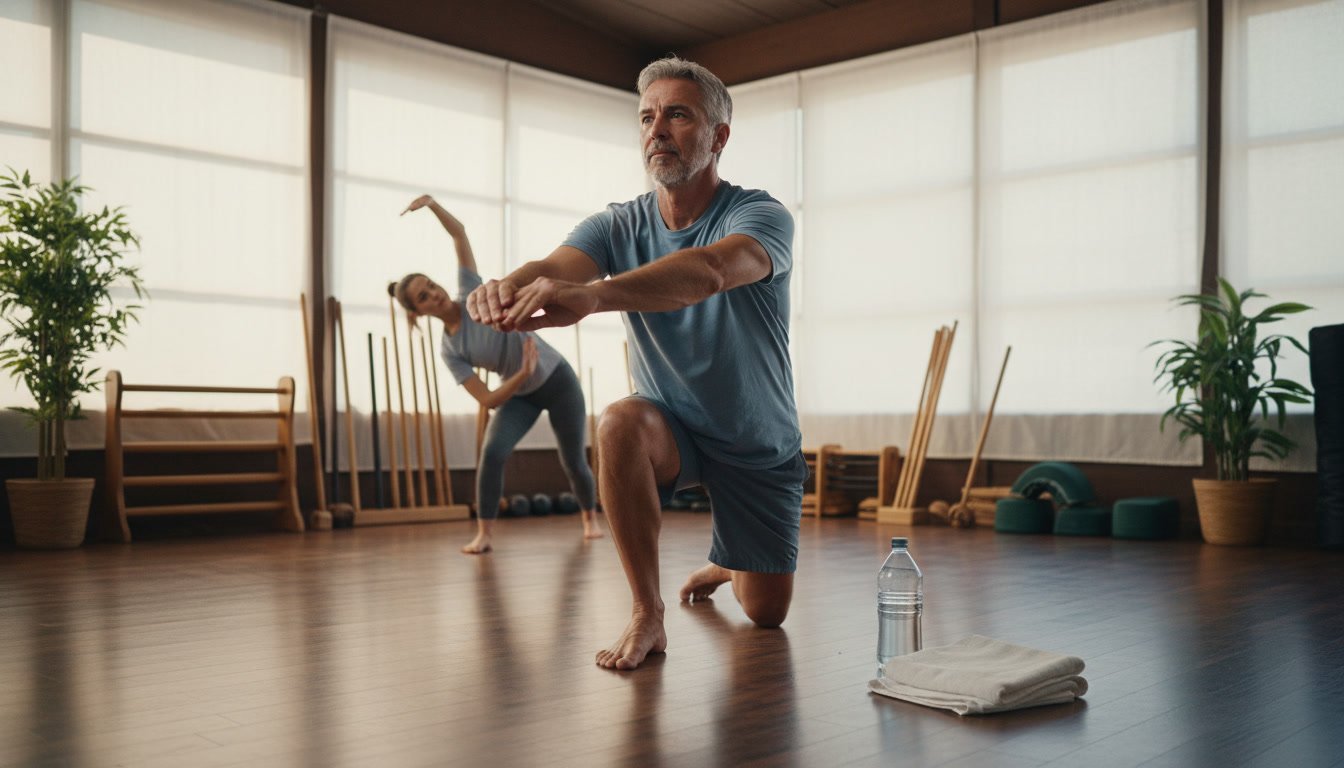
Start movement preparation four to six weeks before your first martial arts class. This pre-training phase reduces injury risk dramatically and makes your actual training more productive from day one.
Walk 20 to 30 minutes daily to rebuild cardiovascular base. Add bodyweight squats, wall push-ups, and planks in small sets throughout the day. Focus on consistency over intensity. Your goal is tissue adaptation, not exhaustion.
Include daily mobility work targeting hips, shoulders, and ankles. Five minutes of gentle movement in the morning prevents stiffness and gradually expands your range of motion. This foundation work matters more for long-term success than rushing into advanced techniques.
Choosing the Right Martial Arts Style for Your Goals
Not all martial arts suit returning adults equally well. Some styles demand explosive athleticism, while others emphasize technique, leverage, and efficiency over raw power.
Kempo blends multiple disciplines and allows practitioners to adapt techniques to their physical capabilities. Wing Chun focuses on close-range efficiency and minimal wasted motion, making it accessible for adults with limited flexibility. Taekwondo builds flexibility gradually if you work with instructors who scale expectations appropriately.
Consider whether you want self-defense practicality, fitness benefits, cultural tradition, or competitive elements. Your answer guides your style selection more than any objective ranking of effectiveness.
What to Expect in Your First Month
The first month focuses on foundational movements, basic stances, and conditioning your body to new movement patterns. You will feel sore in muscles you forgot existed. This is normal adaptation, not injury, as long as the pain is general muscle fatigue rather than sharp joint pain.
Expect to drill the same basic techniques repeatedly. This repetition builds muscle memory and allows your instructor to correct form before bad habits solidify. Adults often want to skip basics and jump to advanced material, but this approach creates gaps that limit progress later.
Your cardiovascular system will be challenged even during technique-focused classes. Martial arts training involves short bursts of intense effort followed by active recovery, which taxes your body differently than steady-state cardio. If you need more background on the beginner experience, understanding how training works for complete beginners provides valuable context.
Five Essential Preparation Steps Before Your First Class
First, invest in proper equipment from day one. Quality mouthguard, well-fitted gloves if required, and appropriate athletic shoes or bare feet depending on the style. Cheap equipment fails when you need it most and can cause injury.
Second, establish a hydration protocol. Start drinking additional water three days before your first class. Dehydration amplifies fatigue and slows recovery, especially for adults whose thirst signals weaken with age.
Third, plan your training schedule realistically. Two or three sessions per week with rest days between allows recovery. Daily training as a beginner leads to burnout or injury within weeks.
Fourth, communicate with your instructor about your history and limitations. Good instructors modify techniques for individual students, but they need information to do so effectively. Ten Tigers Martial Arts (Summerlin) adapts training to individual fitness levels because the program draws on multiple disciplines that offer scaling options.
Fifth, prepare mentally for frustration. Your brain remembers being more capable than your current body allows. This disconnect frustrates many returning adults. Accept that progress takes time and that comparing yourself to younger students serves no productive purpose.
Managing Recovery and Avoiding Common Injuries
Recovery management separates adults who train for years from those who quit after months. Sleep becomes non-negotiable. Your body repairs tissue and consolidates learning during deep sleep, and cutting sleep short undermines both.
Ice acute inflammation within 48 hours of training. Use heat for general stiffness and chronic tightness. Learn the difference, because applying heat to acute inflammation worsens swelling.
The most common injuries for returning adults include strained hip flexors, lower back pain from improper core engagement, and shoulder issues from poor punch mechanics. These injuries share a common cause: doing too much too soon before tissues adapt. The solution is disciplined progression, not toughness or pain tolerance.
Nutrition and Supplementation for Adult Martial Artists
Your nutrition needs shift when you add martial arts training. Protein requirements increase to support muscle repair. Aim for 0.7 to 1.0 grams per pound of body weight, spread across meals throughout the day rather than concentrated in one sitting.
Carbohydrates fuel training intensity. Adults often under-eat carbs due to diet trends, then wonder why they feel weak during class. Time carb intake around training: moderate amounts two to three hours before, and again within an hour after class to support recovery.
Consider vitamin D, omega-3 fatty acids, and magnesium supplements after discussing with your doctor. These support joint health, reduce inflammation, and aid sleep quality. Avoid proprietary blends and exotic supplements marketed to athletes. Basic nutrients in adequate amounts outperform expensive formulations.

Building Mental Toughness Without Recklessness
Mental preparation matters as much as physical conditioning. Martial arts training will frustrate you. Techniques that look simple when demonstrated feel impossible when you attempt them. Younger students will outperform you in some areas.
Develop the habit of focusing on personal progress rather than comparisons. Track specific improvements: holding a stance 10 seconds longer, completing a combination more smoothly, or maintaining form when fatigued. These markers prove progress when belt rank still seems distant.
Understand the difference between productive discomfort and dangerous pain. Productive discomfort includes muscle fatigue, cardiovascular challenge, and the awkwardness of new movements. Dangerous pain includes sharp joint sensations, pinching, or pain that worsens during activity. Learn to identify which category you are experiencing and respond appropriately.
Adults training in areas like North Summerlin or South Summerlin often balance training with demanding careers and family obligations. Mental toughness includes the discipline to rest when needed rather than proving you can train through exhaustion.
Your Path Forward Starts With One Prepared Step
Returning to martial arts after decades away requires honest assessment, medical clearance, gradual physical preparation, and realistic expectations. The adults who succeed long-term are those who prepare systematically rather than those who jump in unprepared. Your age and time away from activity are not disqualifications but rather factors to account for in your training approach.
Ten Tigers Martial Arts (Summerlin) works with adults at all fitness levels in adult group classes that adapt to individual capabilities while maintaining high standards for technique and effort. Whether your goal is practical self-defense, fitness, or personal challenge, the right preparation makes your return to training both safe and sustainable. Call +17026230356 to discuss how our programs can support your specific needs and schedule a time to visit the school.